
Culture plays a vital part in the success of any organisations. To understand the culture within the organisations I will first start with exploring what organisations are? To be specific organisations are a very essential part of our community, both public and private sectors, also including the voluntary sector (Mullins and Christy, 2016). All organisations have some sort of function to perform. There are many organisations that comes in different form, shape, sizes and cultures. Organisations have variety of purposes and needs. Mutual topographies in any organisation are its people, objectives, structure and management (Mullins and Christy, 2016).
Organisational culture is also seen as set of beliefs, behaviours, systems and values that an organisation keeps representing itself (Alvesson and Sveningsson, 2008). It impacts on the way that people in an organisation interact with each other and with others external to the organisation, including clients and stakeholders (McCalman and Potter, 2015). The corporate culture is maintained by the organisational leadership who structure the processes within which the organisation functions, and which allow employees to follow the organisational values (Mullins and Christy, 2016).

Uber is the best example of a fragmented company culture. A blog post made headlines when the former uber engineer Susan Fowler claimed to be sexually harassed and faced an ambivalent response from its HR department (Weissman, 2019). Uber was labelled by the Times ‘s Mike Isaac as a “Hobbesian environment” where “workers are pitted against one another and where a blind eye is turned to infractions from top performers” (Weissman, 2019). Organisational culture crises are mostly the product of many small failures within the company. Human resources department is very important in order to keep things under control. According to Fowler Uber’s HR failed her. Stated as “When I reported the situation, I was told by both HR and upper management that even though this was clearly sexual harassment,” (Weissman, 2019) she further explained, “they wouldn’t feel comfortable giving him anything other than a warning and a stern talking-to” (Weissman, 2019).
Unsuccessful human resource department is one of the most tenacious problems that epidemic all organisations, no matter what their form, size or shape. For Fowler, HR was the only way she had to report managers’ wrongdoings (Weissman, 2019). The system that was meant to document and systematically inspect the claim chose to (according to Fowler) turn a blind eye in favour of a manager who allegedly produces good results. HR’s failure to provide a safe environment in which employees can report misconduct left Fowler feeling unsupported. In the end, she felt she was left with no recourse but to ignore the harassment or leave. Change is only being brought about now because Fowler went public with her story.
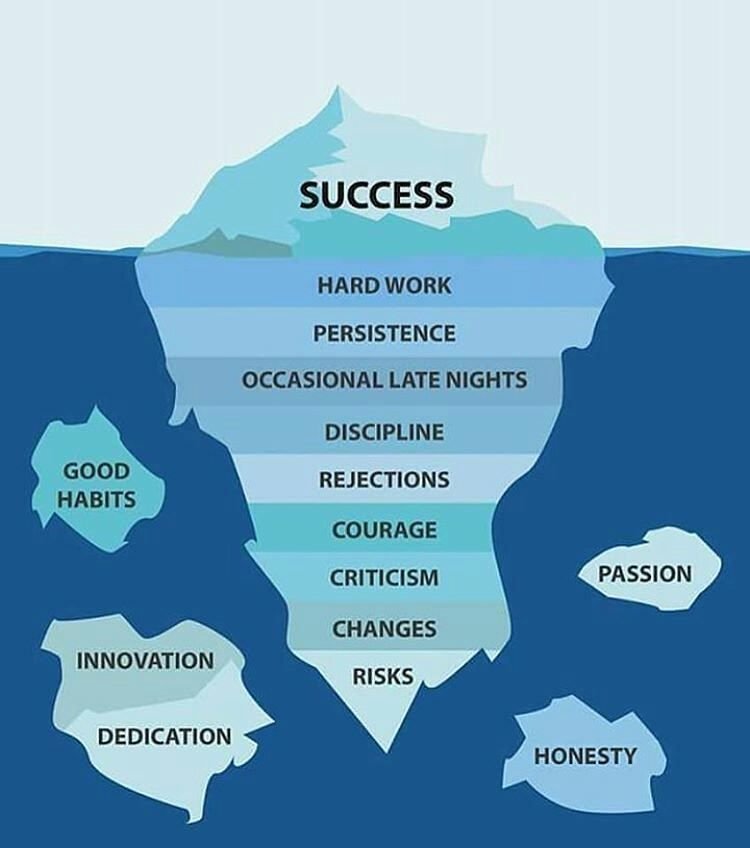
Based on the issue it can be concluded that the organisational culture is not been managed let alone does not even exist. Organisational culture is mainly concerned with the behaviour of people within an organisation. Organisation and people need each other, and management is an essential part of any workplace. Iceberg model or theory of omission applies to systems and problems such as Uber’s HR problem as seen with an iceberg, only its tip is visible, while the bulk of it is below the water surface making it invisible (Reissner, Pagan and Smith, 2011). Similarly, the very less amount of information and help was provided to Flower. Behavioural aspects play a major part in the productivity and quality of work life (Reissner, Pagan and Smith, 2011).
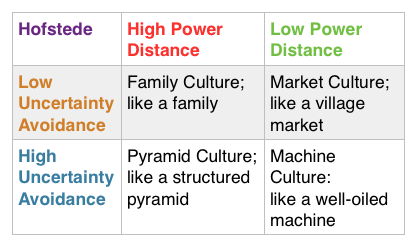
Additionally, Hofstede argued the importance of knowledge on culture and workplace differences. In terms of Uber, high Power distance and uncertainty avoidance makes it hard for the company to make changes and implement equality at workplace (Schooler and Hofstede, 1983). This problem can only be solved if the power distance and uncertainty avoidance is well managed within the departments, giving the employees a sense of safety and security (Schooler and Hofstede, 1983).
In my opinion culture can be well managed within the organisation. Understanding the individual working in any company will not only help the firm increase its productivity or quality of work but it will build strong relationships. Culture is something that can be changed and managed by the right skills and abilities to manage the work environment. Culture is understanding of values and morals of people coming from different backgrounds and working together as a team to excel.
References:
Alvesson, M. and Sveningsson, S. (2008). Changing organizational culture. London: Routledge.
McCalman, J. and Potter, D. (2015). Leading Cultural Change: the theory and practice of successful organizational transformation. London: Kogan Page.
Mullins, L. and Christy, G. (2016). Management and organisational behaviour. 11th ed. Pearson Education Limited.
Reissner, S., Pagan, V. and Smith, C. (2011). ‘Our iceberg is melting’: Story, metaphor and the management of organisational change. Culture and Organization, 17(5), pp.417-433.
Schooler, C. and Hofstede, G. (1983). Culture’s Consequences: International Differences in Work-Related Values. Contemporary Sociology, 12(2), p.167.
Weissman, C. (2019). This Is What Caused Uber’s Broken Company Culture. [online] Fast Company. Available at: https://www.fastcompany.com/3068475/this-is-what-caused-ubers-broken-company-culture [Accessed 10 Jun. 2019].
 javeria.travel.blog
have a clear idea and good structure, like used many surveys and examples to prove the point.
LikeLike
Thank you for your comment Jin, would you like to make any recommendation ?
LikeLike
Really Nice idea about culture. and the examples is useful to express that.
LikeLike
Hi Riche,
Thank you for your reply, would you like me to improve anything, your recommendation would be very helpful with the theory reference.
LikeLiked by 1 person
Nice blog, I am doing MBA in Fashion management. I would like to ask something based on that. Do you think that culture can effect trends as well ?
LikeLike
Hi Banks, Thank you for your comment and question. I think it’s debatable, it can have impact on the life of employees if they are not provided with a good, relaxed and productive working environment. As mentioned in iceberg model, understanding the values and engagement can have a huge improvement in a workplace.
LikeLike
Javeria, it’s a well-written blog. I would like to see more theory application. can you give me an example of another theory that you would like to apply with uber’s harassment issue?
LikeLike
Thank you for your comment Candice.
yes the third theory I would apply would be 4V, I think that model gives the direct to any company. understanding the value, vision and voice will give employees the confidence
LikeLike
Good blog. Very clear insights. Carry on with the beautiful talent of writing that you have. 🙂
LikeLike
Thank you for your kind words.
LikeLike
I think you have finished a very well work, it is easy and clear to understand the structure of your blog1, also the example is strong expressing the fragmented company culture.
LikeLike
Thank you for your comment. understanding the main problem in any organisation is the key to solving the problem.
LikeLike